Burnaby Massage Therapy
Active Release Technique
Massage Therapy
Active Release Technique (ART) Massage Therapy in Burnaby | Registered Massage Therapist (RMT) – EastWest Physiotherapy
Active Release Technique (ART), also referred to as Active Release Therapy, is one of the most effective hands-on soft tissue therapy treatments for pain and mobility issues, repetitive strain injuries, and many conditions involving muscles, tendons, ligaments, and fascia. At EastWest Physiotherapy Burnaby, our Registered Massage Therapist may use ART to help you move easier, heal faster, and get back to the activities you enjoy. Whether that means lifting overhead without shoulder pain, running without shin splints, or simply waking up without neck tightness.
This technique is especially beneficial when the real problem lies deeper than muscle soreness. This technique can work well when scar tissue, adhesions, or chronic tension are limiting motion, irritating nerves, or causing pain that keeps coming back.
What Is Active Release Technique (ART)?
Active Release Technique is a manual therapy technique developed by Dr. Michael Leahy to identify and break down soft-tissue adhesions. Adhesions are dense bands of scar tissue that develop when tissues heal poorly following:
- Repetitive strain or overuse
- Previous sprains or muscle tears
- Poor biomechanics or compensation patterns
- Prolonged sitting / posture stress
- Surgery or trauma
These adhesions behave like glue, sticking layers of muscle and fascia together so they no longer slide smoothly. This binding of different soft tissue structures lead to reduced range of motion, stiffness, pain, pulling sensations, weakness, and sometimes tingling or numbness if nerves become affected.
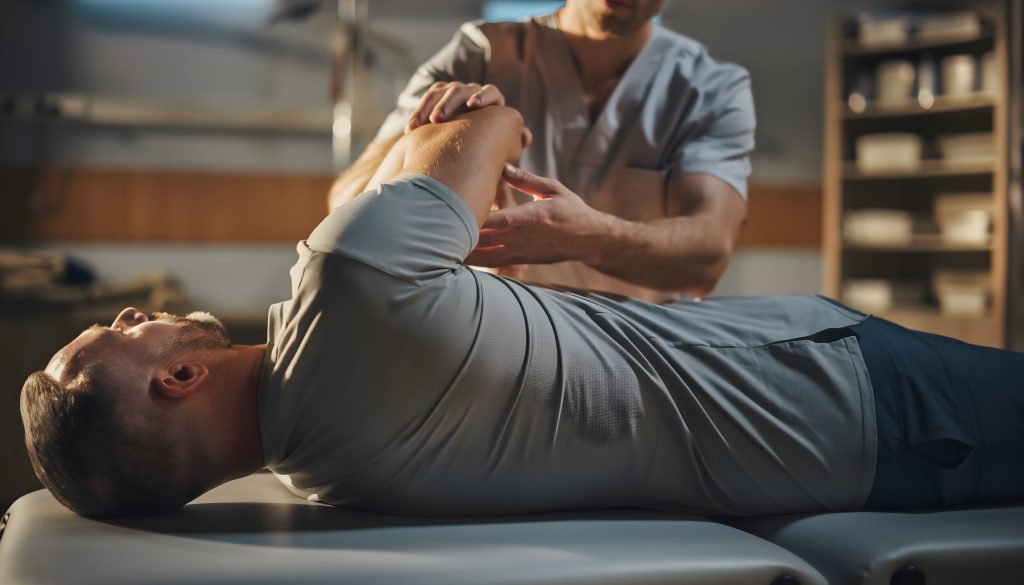
ART works by applying manual tension to restricted tissues while you move the muscle through specific movements combining pressure and movement, which can be more effective than general massage alone.
How Active Release Technique Works
An ART session begins with a detailed hands-on assessment of the soft tissue structures. Our clinicians feel for:
- tough or rope-like bands in the muscle
- soft tissue inflammation
- tension around tendons or near joints
- restricted movement during active movement or passive movement
Once the restricted tissue is found, your therapist applies targeted treatment using firm, localized pressure while you move the affected muscle through specific movements, either a stretch or shortened position. This movement mechanically breaks down adhesions, increases blood flow, and restores sliding of the muscle fibers allowing your body to break down any soft tissue restrictions. There is going to be mild discomfort during the technique, and this sensation will reduce over time.
Over time, ART helps:
- restore normal muscle length and elasticity
- improve circulation, oxygenation & nutrient exchange
- reduce nerve irritation and numbness/tingling
- restore strength and functional endurance
- correct movement patterns that caused the injury
Many people notice relief during the first session, especially when stiffness or nerve compression is involved.
Why ART Is Especially Effective for Nerve-Related Pain and Stubborn Injuries
One of the reasons Active Release Technique (ART) stands out from other soft tissue treatments is its effectiveness in addressing nerve-related pain and injuries that don’t fully resolve with rest or traditional massage. Many people experience pain not only from tight muscles, but from nerves being compressed or irritated as they pass through layers of muscle and fascia.
When adhesions form around nerves, even normal movement can trigger symptoms such as:
- Tingling or numbness
- Burning or sharp pain
- Weakness or loss of endurance
- Pain that travels down an arm or leg
ART specifically targets these restrictions by restoring proper glide between muscles, fascia, and nerves. By combining precise manual pressure with active movement, ART helps free nerves from being compressed by its surrounding muscle tension so they can move normally again. This often leads to noticeable improvements in symptoms like sciatica, carpal tunnel syndrome, thoracic outlet syndrome, and nerve-related shoulder or hip pain.
ART is also effective for injuries that keep coming back. Recurrent strains, chronic tightness, or repeated flare-ups are often signs that the underlying tissue never healed properly. Scar tissue may have formed in a way that limits movement, alters biomechanics, and overloads surrounding structures. ART helps correct these deeper issues by breaking down the scar tissue, rather than simply calming symptoms temporarily.
Because ART directly addresses tissue quality, movement efficiency, and load tolerance, it is especially valuable for:
- Athletes returning to sport
- People with physically demanding jobs
- Desk workers with long-standing postural tension
- Individuals who have “tried everything” with limited success
When combined with corrective exercise and movement retraining, ART helps ensure that improvements last, so your body doesn’t fall back into the same pain patterns again.
Conditions Active Release Massage Therapy Helps Treat
ART is especially effective for injuries caused by overuse, repetitive strain, or postural tension. It can be used on muscles, tendons, ligaments, fascia and even peripheral nerves.
Neck & Shoulders
Whiplash, postural strain, rotator cuff injury, frozen shoulder, nerve compression, tension headaches, migraines
Upper Back & Thorax
Rib dysfunction, interscapular tightness, desk-related stiffness
Lower Back & Pelvis
Chronic low back pain, SI joint dysfunction, piriformis syndrome, sciatica-related pain
Elbow & Wrist
Tennis elbow, golfer’s elbow, carpal tunnel syndrome, forearm strain, typing overuse, De Quervain's tenosynovitis
Hip & Knee
IT band syndrome, patellofemoral syndrome, hip flexor strain, running-related pain
Foot & Ankle
Plantar fasciitis, Achilles tendinopathy, ankle stiffness post-sprain, calf tightness, tibialis posterior tendinopathy
Sport-Specific Injuries
Hamstring tears, quad strains, shin splints, overuse tendon injuries, rotator cuff injuries, groin strains
Benefits of Active Release Technique (ART)
An ART treatment can provide lasting results, not just temporary relief.
- Reduced pain and muscle tension
- Better range of motion & joint freedom
- Improved athletic performance & tissue resilience
- Less nerve irritation and fewer numbness/tingling episodes
- Faster recovery from training & sports injuries
- Improved posture and body mechanics
- Fixes the root cause, not just the symptom
Unlike passive massage, ART actively involves you. Your body learns how to move efficiently again, instead of falling back into injury-causing habits.
What to Expect During Your ART Session
ART (Active Release Technique) can be used to treat pain and other symptoms resulting from injury or damage to various body parts, including:
Assessment & movement testing
We evaluate where the restriction originates, the symptom isn’t always the source.
Hands-on soft tissue treatment
You may be guided through movement while the therapist applies pressure to specific soft tissue fibers.
Stretching & mobility retraining
Once released, tissue needs to learn to move properly again.
Strength, postural & load tolerance training
Prevents the same adhesions from returning.
Why Choose EastWest Physiotherapy for ART in Burnaby?
- Registered Massage Therapists trained in ART protocols
- Private one-to-one treatment rooms, no curtain dividers for maximum privacy and comfort
- East-West approach combining ART, manual therapy, IMS, acupuncture & exercise rehab
- We treat the root cause, not just the painful surface
- Convenient location near Brentwood, Willingdon Park & Highway 1
- Multilingual care: English, Cantonese, Mandarin, Hindi, Bengali
Whether you’re an athlete, desk worker, tradesperson or someone living with stubborn pain, ART can help you move better and feel stronger.
Frequently Asked Questions
How is Active Release Technique different from regular massage?
ART is a clinical, movement-based treatment focused on breaking down scar tissue and releasing tight muscles, tendons, nerves, and fascia. Unlike general massage, ART involves specific tension paired with guided movement to target the exact structure causing pain or restriction.
Does Active Release Technique hurt?
You may feel a “good discomfort” similar to a deep stretch or pressure on a tight spot, but it should never feel sharp or intolerable. Your therapist will always adjust pressure to your comfort level. Most patients describe feeling lighter and more mobile right after treatment.
What conditions respond well to ART?
ART is highly effective for soft-tissue injuries caused by overuse, repetitive strain, poor posture, or trauma. Common conditions treated include shoulder impingement, sciatica, plantar fasciitis, carpal tunnel syndrome, runner’s knee, shin splints, tension headaches, and postural muscle tightness.
How many ART sessions will I need?
Most people notice improvement within 1–3 sessions, especially for recent or mild injuries. Chronic or long-standing issues may need a longer duration. Your therapist will assess your response and create a plan that matches your activity level, goals, and the severity of your condition.
Book Your Active Release Technique Treatment in Burnaby
If you’re tired of recurring tension, limited mobility, or pain that never fully heals, it’s time to try a technique that targets the true source of the problem. Our skilled ART therapists in Burnaby will assess, treat, and guide you toward long-lasting recovery.