Burnaby Physiotherapy Techniques
Electrotherapy
Techniques
Electrotherapy & Ultrasound Treatment in Burnaby – EastWest Physiotherapy
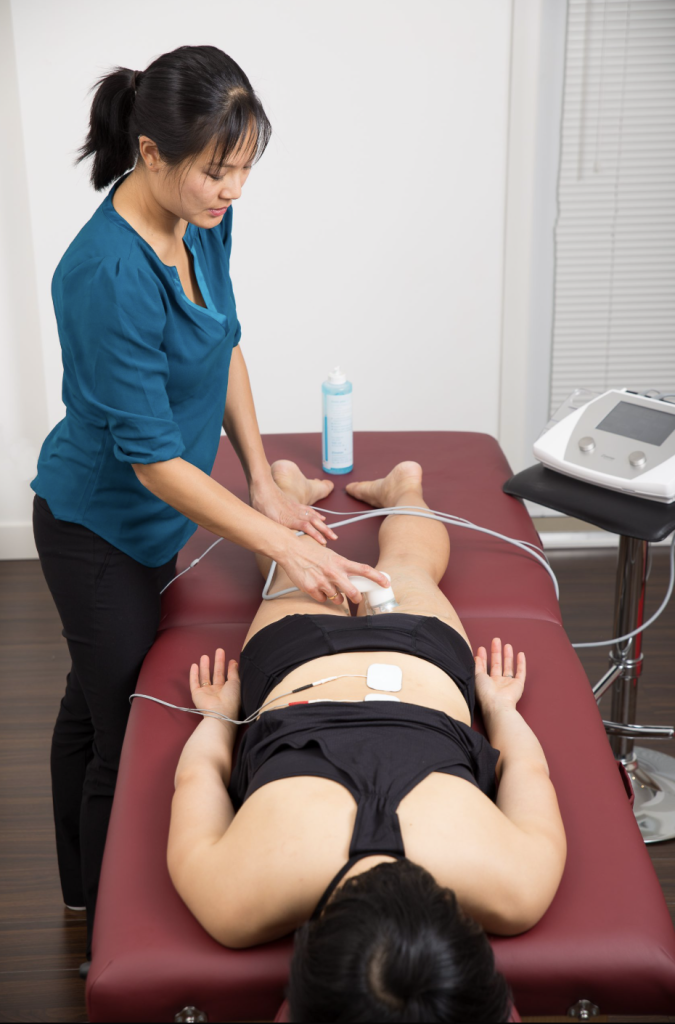
Electrotherapy uses controlled electrical currents to reduce pain, improve movement, activate muscles, and accelerate support tissue healing. At EastWest Physiotherapy in Burnaby, we use several forms of electrotherapy currents depending on your injury and treatment goals. These treatments can help calm acute pain, stimulate circulation, retrain weak muscles, and speed up healing, just to name a few. When combined with other physiotherapy techniques such as manual therapy, exercise rehabilitation and Eastern Medicine techniques such as cupping, or acupuncture, the effect can be extremely effective.
Your Physiotherapist will assess your condition and determine which type of electrotherapy treatment is most suitable for your condition.
Types of Electrotherapy We Use at EastWest Physiotherapy Burnaby
TENS (Transcutaneous Electrical Nerve Stimulation)
TENS is commonly used for pain control. These devices can be hand-held and portable. The most popular one that most people have heard about is the Dr. Ho’s machine. It works in three main ways:
Pain Gating (Sensory Nerve Stimulation)
When you bump your shin then naturally rub it, and the sensation overrides the pain. TENS functions the same way. By stimulating sensory nerves such as vibration and light touch receptors, it blocks the pain signals before they reach the brain.
Endorphin Release
TENS stimulates the body to release endorphins, your body’s natural pain-relieving chemicals. Many people feel relaxed and more comfortable after treatment.
Spinal & Brain Modulation
Certain frequencies can reduce pain-producing chemicals in the spinal cord (such as substance P and glutamate), which is particularly helpful for relieving chronic pain and central sensitization.
IFC – Interferential Current Therapy
IFC is similar to TENS but penetrates deeper into tissues and can target a more specific treatment area.
IFC may help with:
- Pain and swelling
- Deep muscle or joint pain
- Circulation improvement
- Acute or chronic injuries
It works by crossing two medium-frequency currents under the skin to produce a therapeutic beat frequency. Many clients find IFC comfortable, effective, and soothing.
NMES – Neuromuscular Electrical Stimulation
NMES is designed to activate, retrain, and strengthen muscles, especially after injury or surgery.
We may use NMES if you:
- Struggle to contract a muscle on your own due to disuse and/or injury
- Recently had surgery (e.g., ACL repair, rotator cuff repair) and need to activate muscles around the surgical region but unable to
- Have muscle atrophy or disuse after immobilization
- Need help improving strength or neuromuscular control
NMES feels like rhythmic muscle contractions during the stimulation cycle, followed by rest intervals. Patients will try to activate their muscles while the NMES cycle is on.
Ultrasound Therapy
Ultrasound is a commonly used modality for soft-tissue healing. It uses high-frequency sound waves to penetrate tissue and promote repair. Unlike diagnostic ultrasound (which is for medical imaging – i.e. looking into internal organs), therapeutic ultrasound can be a treatment tool in Physiotherapy.
Ultrasound may help:
- Reduce swelling and inflammation
- Improve collagen formation and tissue healing
- Soften scar tissue and promote flexibility
- Increase deep circulation to muscles, tendons, and ligaments
Some people feel gentle warmth or vibration during treatment, while others may feel very little at all, depending on the setting and what goals are to be achieved. It is often combined with exercise and manual therapy for best results.
Trabert Current
Trabert current (also known as 5-second surge) is a lesser-used but effective electrotherapy modality for pain relief and muscle activation. It delivers short bursts of direct current followed by rest periods.
This wave pattern can:
- Help reduce pain sensitivity
- Improve circulation
- Stimulate weak or inhibited muscles
- Relax tissue through rhythmic contraction
Trabert current is an option we may use when clients respond well to muscle-stimulation-style treatment but require a slightly different approach than TENS or NMES.
Is Electrotherapy Safe?
Yes. When used appropriately by a trained Physiotherapist, electrotherapy is considered very safe. Your therapist will adjust intensity and frequency based on your comfort. Mild tingling, pulsing, or muscle contractions are normal sensations.
Advise your Physiotherapist if you have:
- A pacemaker or implanted electrical device
- Metal implants
- Pregnancy
- Active infection
- Poor sensation in the treatment area
What Can Electrotherapy Help With?
Electrotherapy may be used to:
- Relieve acute and/or chronic pain
- Improve local blood flow and circulation
- Decrease muscular tension and pain
- Activate or re-educate weakened muscles
- Reduce swelling and inflammation
- Support recovery after surgery or injury
- Improve mobility
Some clients feel immediate relief, while others notice gradual improvement over several sessions depending on the condition.
What to Expect During Treatment
- Assessment to determine which electrotherapy current fits your needs
- Electrotherapy pads and/or ultrasound gel applied to the treated area
- Sensations such as tingling, buzzing, pulsing, and/or gentle muscle contractions
- Combination with manual therapy, exercises, acupuncture, cupping if appropriate
- A plan to help maintain improvement after treatment
Why Choose EastWest Physiotherapy for Cupping Therapy?
- Private treatment rooms with one-to-one care. No curtained rooms, full confidentiality allowing you to focus on healing and recovery.
- Experienced physiotherapists trained in traditional cupping techniques
- Integrated Eastern and Western approach in treatment techniques
- Can be combined with manual therapy, exercise rehab, and acupuncture
- Controlled suction tailored to your sensitivity and condition
- Convenient North Burnaby location near Brentwood, Willingdon Park, and Highway 1
- English, Cantonese, and Mandarin spoken
Frequently Asked Questions
Does electrotherapy hurt?
Most people find it comfortable. You may feel tingling or rhythmic contractions depending on the type used.
How long does it take to work?
Some clients experience immediate relief, while for others, their improvement occurs over several sessions.
Can I combine it with other treatments?
Yes, our Physiotherapists often pair electrotherapy treatment with manual therapy, IMS, acupuncture, cupping, and exercise rehabilitation.
Book Your One-to-One Physiotherapy Session
Interested in electrotherapy or ultrasound treatment?
Book your session at EastWest Physiotherapy in Burnaby and we’ll guide you through what treatment is best for your recovery.