Burnaby Physiotherapy Techniques
Therapeutic Taping
Techniques
Therapeutic Taping in Burnaby – EastWest Physiotherapy
Therapeutic taping is frequently used by physiotherapists to improve movement, stabilize joints, decrease swelling, and prevent re-injury. Depending on your condition and goals, different types of tape and taping techniques can be used to support healing and enhance performance.
At EastWest Physiotherapy in Burnaby, therapeutic taping may be incorporated into your treatment plan to help you move with confidence, reduce pain, and support proper alignment during daily or athletic activities.
What Is Therapeutic Taping?
Therapeutic taping involves applying specialized tape to the skin to assist muscle function, support joints, improve circulation, or provide sensory feedback. The choice of tape and technique depends on whether the goal is to limit movement, promote movement, reduce swelling, or improve posture.
Our Burnaby Physiotherapists primarily use two categories of tape:
Stiff Tape
Athletic tape, Leuko P tape
Used to:
- Limit excessive motion
- Stabilize joints
- Improve posture
- Support structures during sport or strenuous activity
Elastic Tape (Kinesiology Tape)
Kinesio Tape, KT Tape, RockTape, Leuko K Tape
Used to:
- Promote proper movement
- Reduce swelling and inflammation
- Improve circulation
- Provide sensory feedback to activate or relax muscles
- Support full range of motion
When Would I Choose A Stiff Tape?
Stiff tape is ideal when joint stability or movement restriction is required.
Common Uses:
- Preventing ankle sprains: Athletic tape can be applied to stop the ankle from rolling in.
- Posture correction: Many office workers benefit from posture taping to guide the body away from slouching and reduce neck, shoulder, and upper back pain.
- Patellofemoral tracking or knee pain: Taping can help maintain the kneecap’s proper alignment during bending and straightening.
Stiff tape offers immediate structural support and is especially helpful for athletes, people with joint instability, or those recovering from acute injuries.
When Would I Choose Elastic (Kinesiology) Tape?
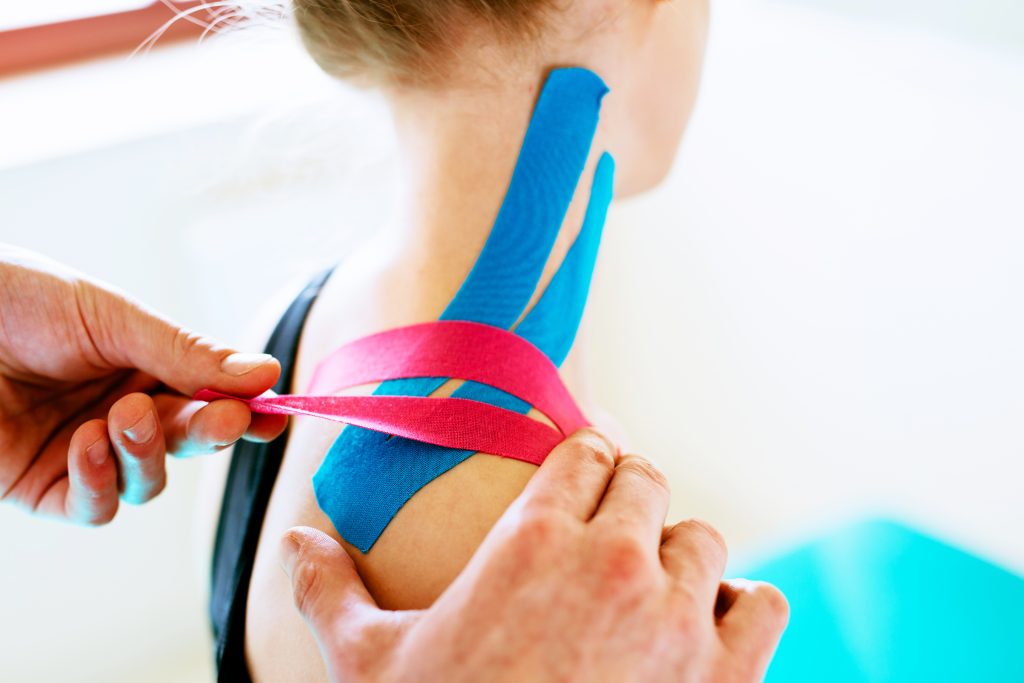
Elastic tape is chosen when maintaining full range of motion is important. Developed in the 1970s, kinesiology tape is designed to mimic the elasticity of skin while lifting the outer layer of tissue to create space underneath.
Benefits of Elastic Tape:
- Enhances circulation
- Helps drain swelling or bruising
- Reduces pressure on pain-sensitive nerves
- Provides gentle sensory feedback
- Supports muscle activation or relaxation
Tape can be cut into an “I,” “Y,” or circular strip depending on the structure and desired effect.
Kinesiology taping is especially useful for:
- Swelling and edema
- Muscle strains
- Tendon irritation
- Postural support
- Sports injuries
- Enhancing proprioception and movement control
Is This Technique A Long Term Solution?
While effective, taping is considered a temporary tool—a stepping stone toward long-term recovery. Long term results require proper strengthening, stretching, and mobility to allow the body to move pain free.
What Conditions Can Therapeutic Taping Help?
Taping may be appropriate for:
- Ankle sprains and instability
- Knee pain and patellar tracking issues
- Shoulder pain and rotator cuff irritation
- Low back and neck pain
- Posture-related discomfort
- Muscle strains
- Swelling and bruising
- Joint hyper mobility
- Sports injury prevention
Your Physiotherapist will determine whether taping is beneficial during your assessment.
What to Expect During Your Taping Session
- Assessment of your movement, joints, and functional needs
- Explanation of which tape type is best for your condition
- Application of tape for stability, mobility, swelling, or posture
- Education on when to remove the tape and signs of irritation
- Guidance on how taping fits into your overall rehabilitation plan
Your Physiotherapist may also show you simple taping methods to use at home between visits if appropriate.
Is This Technique A Long Term Solution?
General Rule: If taping helps reduce pain or improve function, you may leave it on as directed. If it increases discomfort, remove it immediately and wash the area gently with soap and water.
White Athletic Tape (Stiff Tape):
- Remove immediately after your activity
- Leaving it on too long may irritate the skin
Stiff Tape for Joint Alignment/Posture:
- Can stay on 3–4 days, or until it naturally begins to peel
- Remove sooner if skin irritation occurs
Elastic (Kinesiology) Tape:
- Usually stays on 2–3 days
- Will naturally start to peel off
- Safe to remove earlier if uncomfortable
Why Choose EastWest Physiotherapy for Therapeutic Taping?
- One-to-one sessions in private treatment rooms
- Physiotherapists trained in advanced taping techniques
- Customized taping strategies based on sport, work activity, or injury
- Integration with manual therapy, exercise therapy, acupuncture, or IMS
- Supportive approach to posture, joint stability, and injury prevention
- Convenient North Burnaby location near Brentwood, Willingdon Park, and Highway 1
- English, Cantonese, and Mandarin spoken
Frequently Asked Questions
Can taping replace a brace?
Sometimes. Taping can mimic the support of a brace and may help determine whether a brace is needed long-term.
Can I shower with the tape on?
Elastic tape is water-resistant. Pat the area dry afterward. Stiff tape is not meant to get wet.
Does taping hurt?
No. You may feel slight tension on the skin, but it should never be painful.
Is taping a long-term solution?
No. Taping is designed to assist healing, prevent re-injury, and guide movement while your body recovers.
Book Your One-to-One Physiotherapy Session
Interested in how taping can support your recovery or performance?
Book your private physiotherapy session at EastWest Physiotherapy in Burnaby today.